
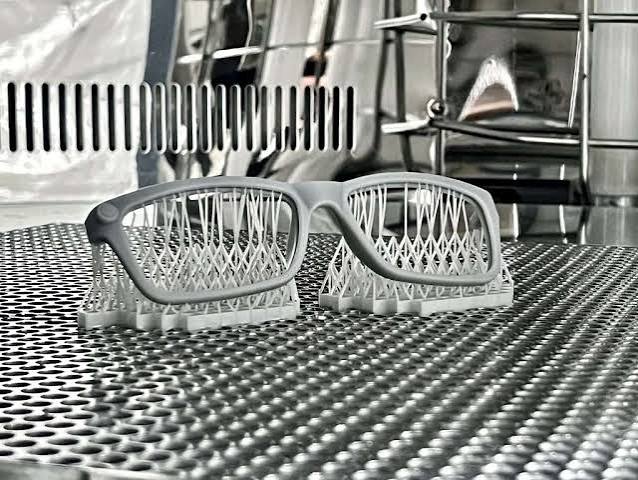
3D printing is exceptionally good at one thing: letting you iterate on geometry fast. What it’s not good at is telling you whether your product can be manufactured — which is a completely different question, and the one that actually determines whether your startup survives contact with a factory.
A founder who spends four months refining a beautiful enclosure on an SLA printer has often spent four months solving the wrong problem. The enclosure looks perfect. It clicks together. It photographs well for the pitch deck. None of that tells you whether it can be injection molded at your target cost, whether the wall thicknesses will sink and warp at production scale, or whether your snap-fits — tuned on a printer with different shrinkage behavior than your eventual resin — will still click once they’re made of the actual material in the actual mold. You’ve been optimizing in a sandbox that doesn’t share the physics of the real building.
I followed these points even if we had state of the art 3D printers in-house:
- Talk to your Manufacturer / Tool-Die Maker Early : Include him in the design process , We used to do design reviews every Sundays with our Manufacturer over Tea and Snacks and eradicated many design flaws early and pre-constrain it for MP (Mass Production).
- REMEMBER , 3D Printers are limited in scope : 3D printers are not troubled by Undercuts , but 3D printers have a scale issue — imagine printing 50 units in a week. DVT needs 10-50 working units.
- SHORTCUTS exist even without 3D printing : Pursue Manufactured Enclosures for a Prototype or Early DVT runs -cheaper / faster.
- Design Team should also be the manufacturing team : Never separate the two.
- Pray that Manufacturing Hell is easy on you.