
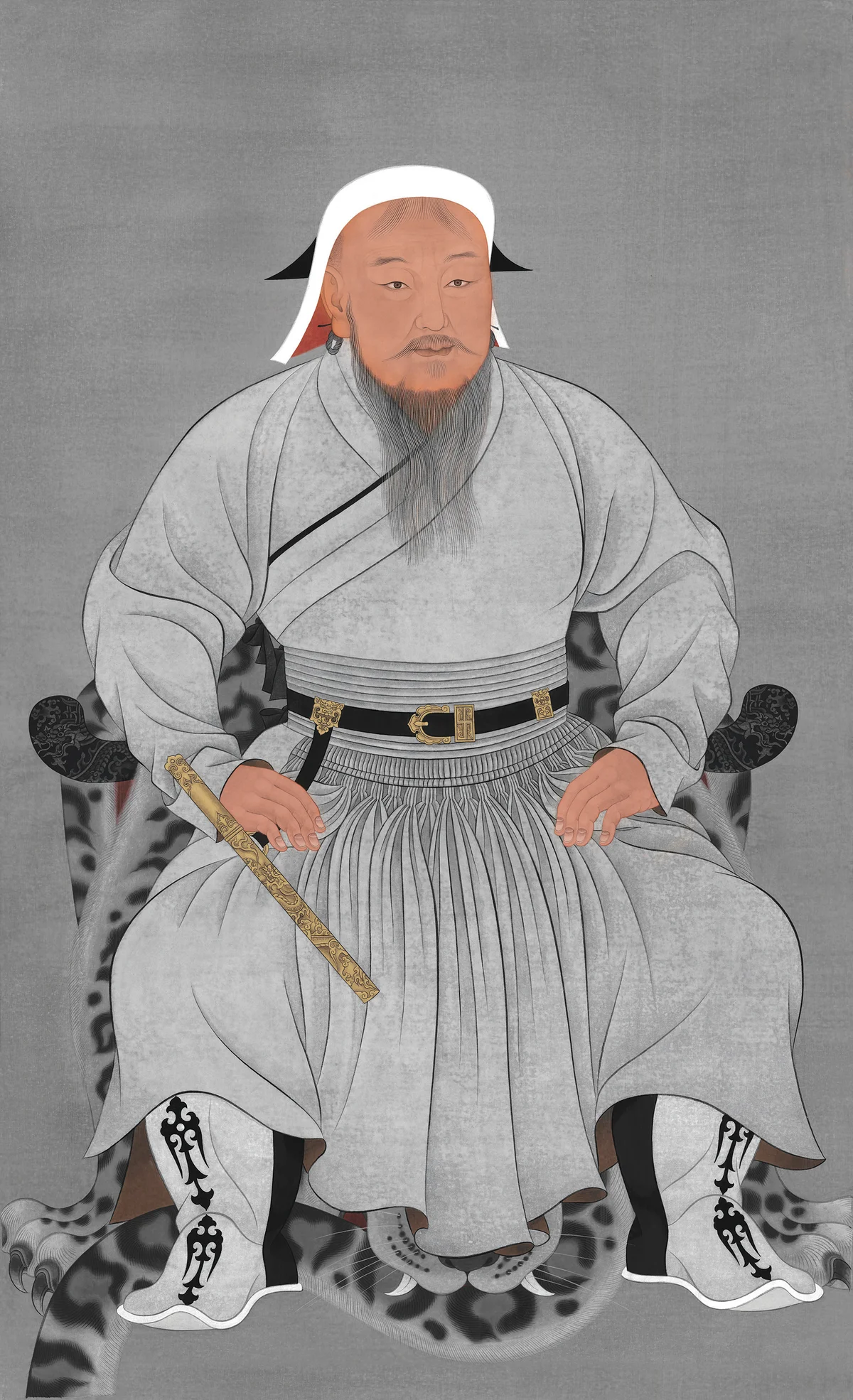
Gengis – How a Nomad Shaped a new world.
Disclaimer: It is crucial to acknowledge the immense brutality and immense loss of life associated with Genghis Khan and the Mongol Empire. Estimates suggest approximately 40 million deaths, or about 10% of the world’s population at the time, which would be equivalent to 800 million people today in modern terms. This period was undeniably marked by widespread destruction, terror, and suffering. However, this reflection aims to explore another facet of Genghis Khan’s legacy: his transformative impact on global connection, innovation, and certain progressive policies that were centuries ahead of their time, offering insights beyond the conventional narrative of conquest.
You know, sometimes you look at the world, and you see something truly profound, something that just breaks everything that came before it. We think we’re so smart today with our algorithms and our networks, but then you dig into history, and you find a singular figure who really changed the game. I’ve been thinking a lot lately about Genghis Khan. Not the caricature, mind you, but the man behind the legend. And let me tell you, this guy was the ultimate disrupter. He redefined what it meant to build, to lead, to connect the world. And he did it from absolutely nothing.
The Visionary Social Architect from the Steppe
Imagine starting with nothing. Born a boy named Temujin around 1162, he lost his father, his tribe, everything, at just nine years old, abandoned to the harsh Mongolian steppe. His childhood was marked by loneliness, abandonment, and struggle, including being kidnapped and re-enslaved at one point. From that emptiness, he forged the largest contiguous empire in history. How? It wasn’t about ideology; it was about pure, unadulterated practicality. He saw the problems firsthand: kidnapping, endless feuds over women and resources. So, he outlawed them. Not because he read it in some book, but because it was common sense, a crime against every ethic and form of morality. This guy had an instinct for what worked.
He built an organization, an empire, on meritocracy – a radical concept at the time. Your family ties didn’t matter; your ability did. His own kin had deserted and betrayed him repeatedly early in his life. But common people, herders, hunters, they remained fiercely loyal because he earned it. He fostered a culture of learning from mistakes. If a general lost a battle, Khan wouldn’t execute him; he’d go to the battlefield, look it over, and learn what went wrong. That’s how you innovate, that’s how you build an insanely great team.
And here’s the truly mind-blowing part: he shunned personal glory and material wealth. He dressed simply, lived in a tent, ate what his soldiers ate. He forbade anyone from writing about him, painting his likeness, building statues or temples in his honor during his lifetime. This wasn’t vanity; it was profound foresight. He understood the corrupting nature of power, the trap of worshipping leaders instead of the underlying principles. He wanted his nation to live, not his image. Talk about thinking different.
The Revolutionary Military Machine
The Mongols’ military was simply unstoppable, not because they were bigger, but because they were smarter, faster, and utterly innovative.
Psychological Warfare: He didn’t just conquer; he terrorized. He encouraged refugees to spread horrific tales of Mongol ferocity, weakening the next city before he even arrived.
Horse Mastery: Every Mongol was trained from birth to be inseparable from their horse, learning to ride alone as early as three years old. They could ride at incredible speeds, even standing, and shoot arrows with deadly accuracy from 200 meters or more. Each soldier had five horses, allowing for relentless speed and coverage, with horses rotating to rest every few days. This allowed for travel from Mongolia to Hungary in just six weeks.
Adaptability: Khan had no set way to think. When he first encountered walled cities, a concept alien to the steppe, he didn’t just smash into them. He adapted. He tried diverting rivers to bring down walls, learning from initial failures like flooding his own camp. They learned, they iterated, and that became a strategy that worked for 50 years, all the way to Baghdad.
Technological Fusion: The Mongols didn’t invent gunpowder or flamethrowers, but they were brilliant at connecting the dots. They took Chinese gunpowder, Middle Eastern flamethrowers, and European bell-casting techniques (which produced strong metal) to create primitive cannons. That’s pure technological synthesis – taking existing pieces and combining them in revolutionary ways.