
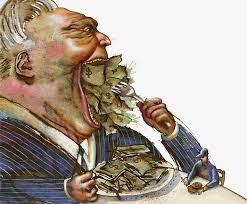
By all accounts, we live in an age of infinite demand. People want more — more experiences, more income, more convenience, more justice, even more meaning. Yet if there’s a constant in human history, it’s this: wanting is cheap. Making is hard.
This is not merely a moral observation. It’s a structural truth that defines both human psychology and economic systems. In classical economics, demand is the easier half of the equation. To demand something, you need only desire it. To supply it, however, you need resources, skill, labor, time, coordination — and often, sacrifice.
This asymmetry between desire and production is at the heart of what makes economics a “dismal science.” It reminds us, again and again, that we can’t have everything we want. Even in an age of AI and automation, scarcity has not disappeared — it has simply moved upstream into attention, talent, and energy.
The Fantasy of Effortless Abundance
If economics begins with scarcity, psychology begins with longing. And here, too, the divergence is clear. Our species is wired to desire — food, shelter, security, love — and later, status, luxury, and meaning. But the mechanism to fulfill these desires is far more fragile.
We can want an iPhone, a 6-pack body, a million followers. But to produce them — or become the kind of person who can — requires repeated effort under constraint. What social media has done, perhaps, is flatten the perception of this process. The results of creation are visible instantly. The grind that built them is invisible.
We live, in effect, in a world of hyper-demand and under-supply — not just of products, but of builders, doers, and problem-solvers.
Markets Reward Creation — But Not Equally
Consider how this plays out in the market. The tech entrepreneur who builds a scalable platform creates disproportionate value — and is often disproportionately rewarded. The gig worker, meanwhile, fulfills someone’s “want” (a ride, a meal, a delivery) but cannot capture any meaningful portion of the value chain.
This isn’t necessarily an indictment of capitalism, but a reminder of its structure: capital tends to reward those who create supply under conditions of scale, not just those who respond to demand.
Indeed, Karl Marx and Adam Smith would both agree — though for different reasons — that production is where wealth is generated. The consumer participates in the economy. The producer shapes it.
The Hidden Cost of Instant Gratification
In modern times, we’ve built systems that mask the cost of creation. Global supply chains allow consumers in New York to buy t-shirts made in Bangladesh without ever considering the labor or emissions involved. The Amazon package arrives tomorrow, so we forget the logistics, labor, and inventory risks it took to make that possible.
This creates a cognitive disconnect: we expect everything to be fast, cheap, and easy — because our interface with the world (screens, platforms, UI) has removed the friction of making things.
In the long run, however, the gap between effortless demand and delayed supply catches up — in inflation, in burnout, in inequality, and in social disillusionment.
A Culture of Want Needs a Culture of Making
So what can be done?
- Economically, we must revalue labor, education, and innovation — not just consumption and clicks.
- Culturally, we must teach young people that making anything worthwhile — a business, a book, a better society — is hard.
- Psychologically, we must train ourselves to accept discomfort, patience, and slow progress.
In other words: desire may be natural, but creation is developmental. It is not the default. It is the achievement.
Conclusion: The Morality of Effort
To want is human. To create is civilization.
At a time when algorithms know our desires better than we do, perhaps the most subversive act is not to want more — but to make more. More ideas. More institutions. More compassion. More value.
Because in the end, as every economist knows, value is not what people want. It’s what someone has made — and others cannot replicate easily.
And that, as Marx might say, is the real power.