
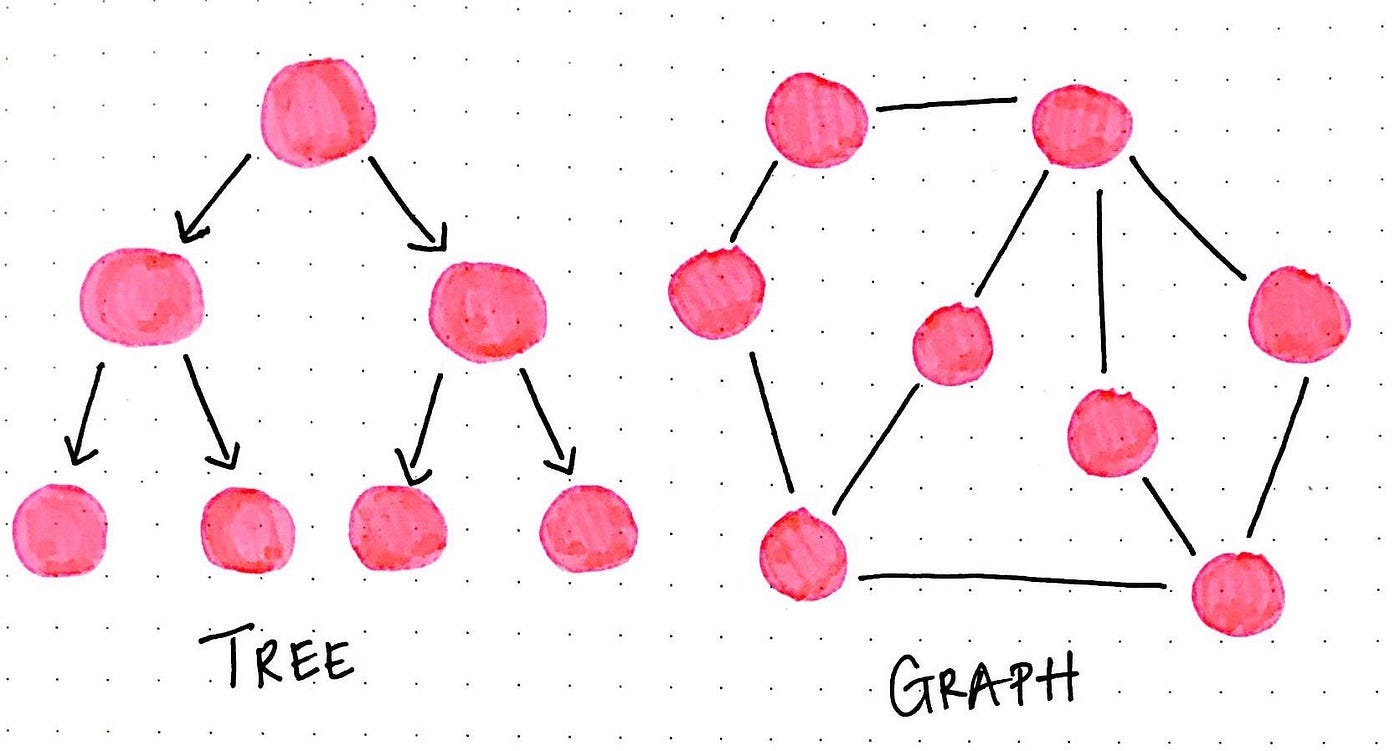
Back when I was building my startup, I met Kuldeep—a developer who loved tinkering with Unity. At the time, he was fascinated by game development, mostly because that’s what everyone around him was doing. His seniors were into game engines, visual effects, and gameplay physics—so naturally, he followed that path.
We were working in the same space—not directly, but often side by side. And over a few lazy afternoons and spontaneous whiteboard chats, we started talking about topics far outside the game dev loop.
🌐 The Shift: From Unity Scenes to Graph Theory
One day, while casually discussing how game environments model worlds, I introduced a graph theory problem I had been thinking about. It wasn’t formal or urgent—it was one of those “this is cool, and I don’t know the answer” kinds of ideas.
Kuldeep was intrigued, asked a few surface-level questions… and then moved on.
Or so I thought.
⏳ Six Months Later: A Surprising Return
Out of nowhere, half a year later, Kuldeep came back and said,
“I kept thinking about that graph problem… I think I’ve figured something out.”
He showed me his solution—a completely fresh take on it, full of creativity and lateral thinking. Sure, it wasn’t perfect, but it was far beyond what you’d expect from someone outside the math research world.
I suggested he write to a renowned graph theorist in Chicago, someone I’d followed in academic circles. To our surprise, the professor responded—and confirmed that Kuldeep’s solution was valid and promising, though it had a few parts that needed more work.
That moment was incredible. A Unity-focused developer had wandered into the wild world of graph theory—and found something new.
🧩 A Glimpse Into Real Graph Theory: The Reconstruction Conjecture
Let me share a current, fascinating problem in graph theory (similar in spirit to what Kuldeep tackled):
🔍 The Graph Reconstruction Conjecture
Can a graph be reconstructed entirely from the collection of its vertex-deleted subgraphs?
Formally, for a simple graph GG with n≥3n≥3 vertices, is it possible to uniquely reconstruct GG from the multiset of graphs formed by deleting one vertex at a time?
Despite its simplicity, this problem has remained unsolved since the 1940s. It’s deceptively hard—and deeply connected to information theory, data privacy, and even network recovery.